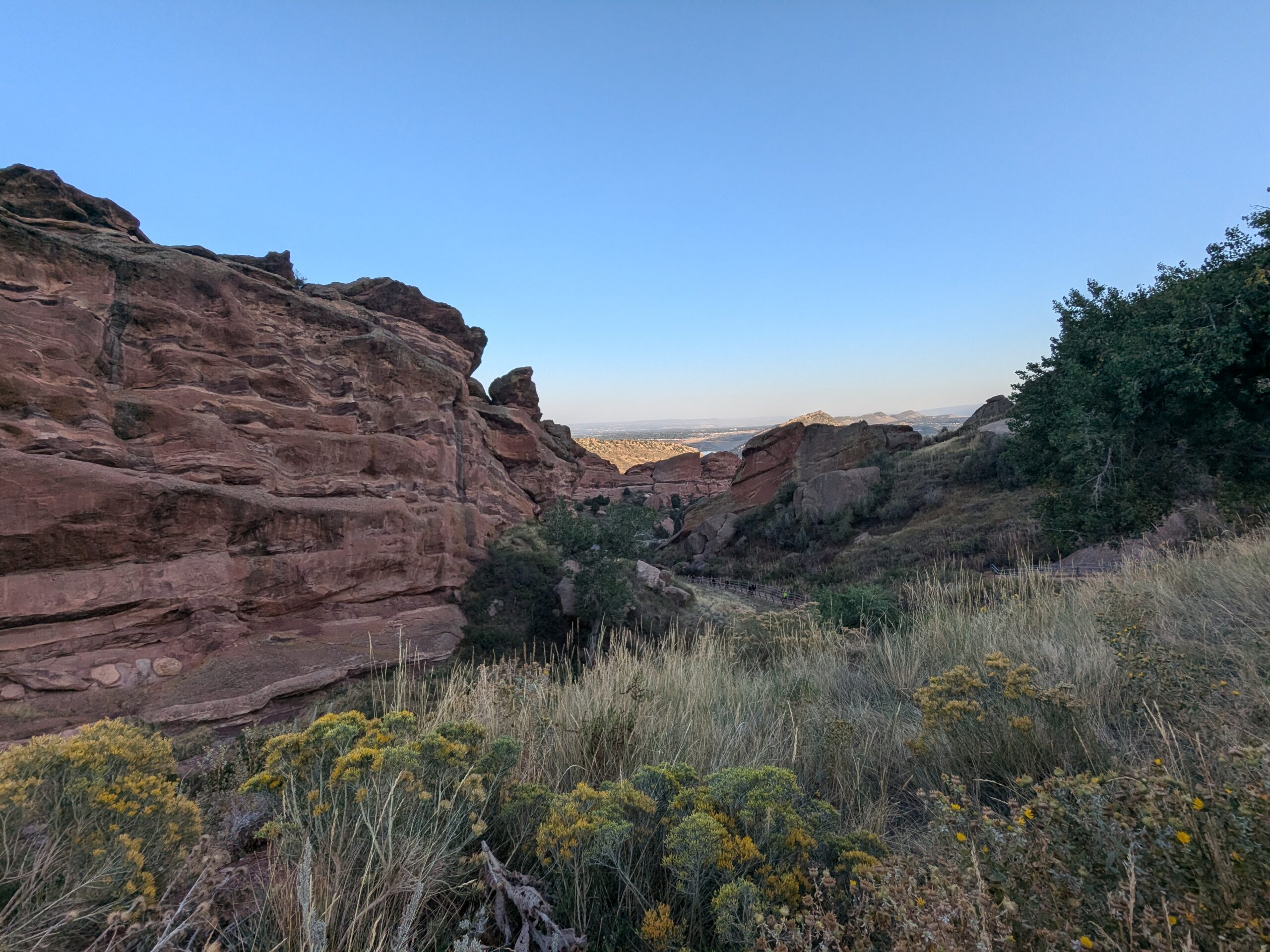
Lead vocalist of Wardruna Einar Selvik said at their show at Red Rocks Amphitheater last October that there used to be a song for everything: sowing seeds, picking herbs, brewing beer. The song connected action with self, and the living entities we were working with (e.g, seeds, herbs, grains in beer). How deep do we go into the realm of spirit in all? The band’s ethos is to celebrate connections with ancestor and earth, but not in such a way that they romanticize the past or become stuck there, but rather carry the past forward into the present. Some things we should let go, he says, some things he wishes were still around. Some of them, though, we can celebrate by transforming them into our present moment.

We must remember. Traditions give us meaning and a sense of purpose. Yet we disconnect ourselves from our daily tasks when have machines mediate between us and the activity.
While in Denver I saw a woman just leaving work as a security officer, still in her blue uniform, while we both waited for the train to arrive. It was near midnight. As I stood clutching my luggage, she sat on a bench with cell phone in hand, and scrolled through video reels. I get it: she’s worn out, she wants a mental break. Maybe she works two or three jobs and is transitioning into the second one. She’s probably sat here countless times, so the train stop isn’t anything new, it’s one of those in-between places we don’t really notice, while my senses were heightened as a visitor and dulled by travel.
The content on our cell phones, things on the internet, mediate our time for us. How we choose to fill our time—quick clips of mindless videos we flick through, countless images we absorb but don’t carefully think about—reflects what we value today. Often we choose to not participate in the moments that are in-between, but to allow an algorithm to decide what we’re going to passively consume (a “filterworld” issue where our culture has been “flattened,” see NPR article “How social media algorithms ‘flatten’ our culture by making decisions for us” on the book Filterworld by Kyle Chayka). Our connection with what feeds and nourishes us is severed a little more, inch by inch, each time we choose to rely on some machine rather than listen to what the earth is telling us she needs us to do—or what we need to do for ourselves (which is also a way of listening to the earth)
How do we know what to bring from the past and what to let go? Machines give us countless benefits in the Western world: we basically don’t have to worry about how the harvest will go this year (we can expect grocery stores to always have food to buy) which means we really don’t have to worry about changes in the weather (except for when a swollen river rudely sweeps our home away). Turn up the air conditioning. Turn up the heat.
I was raised with wood stove heat, so it was familiar to me to live for ten years as an adult where I split wood, stacked it, stored it in a dry place, and carried it in to keep by the stove. It warms you twice, maybe three times, as they say. I participated daily with heating my house, had to wake myself up in the middle of the night to add more logs to the fire, and would come home from work to a chilly house and nothing but ashes. It was a lot of work, particularly living alone with a stove that was finicky and didn’t hold much wood. But would I return to that hard work, after living in a home with a furnace that transforms propane into forced warm air at the push of a button? Yes. And it’s something to do with this participation with my environment.
This summer has been hot. Where I was raised we didn’t have or need air conditioning, and the first home I lived in in NC, with the wood stove heat, I didn’t have A/C since I lived in a wooded hollow on the side of a mountain. It was more damp than anything, although there were plenty of nights I would lie there sweating, listening to my husky and malamute pant beneath their fur coats. Now that I’ve moved down into the foothills, I’ve quickly adapted to keeping the A/C on and you can usually find me inside in the middle of the afternoon, having retreated from the outside swamp oven. But as summer draws to its end (Lammas marks another solar shift toward dark) I have felt utterly disconnected from my environment as I huddle in the flat, stale, cold air-conditioned rooms of my house. Mornings I walk the dog or run, I water the garden, I weed, I pick blackberries; but by noon the heat is more than I can bear. And yet I haven’t felt like I’ve really experienced summer. I’ll take my writing or a stack of books outside to read and last for about 30 minutes before the neighbor’s roar of lawnmowers and the mosquitoes chase my dog and me back inside.

Winters I long for weeks of below-freezing temperatures and snow so that I can really experience winter. I want to feel the extreme of it. Feel all living things hold still with breath held, feel the dark enter my consciousness even in the middle of a bright winter day. Feel how empty the world can be. After an air-conditioned escape from summer, I’ve realized I need much the same thing in the season of growth. I need to feel the heat and the sun.
But I’ve been letting machines mediate between me and my environment, I’ve let them lull me into being disconnected from myself. I don’t participate in making myself warm by keeping a fire burning in the cold months, nor do I need to seek out earth’s cool rivers, splash in her lakes, or eat half a watermelon in one sitting to cool off.
I can just push a button. What song do we sing for that?
